
Last Updated: November 19, 2026
Quick Summary
The most direct way to prepare for the hazard test is to work through the nine free official practice tests from the Department of Transport and Planning, which mirror the real format of short traffic-scene clips tapped when you would act. Work through them in order, review every clip you get wrong, then add supervised lessons on real roads.
- The hazard test is a computer-based assessment you must pass before booking a drive test.
- Attempt the first three practice tests without pressure and note every clip you get wrong.
- Re-watch each failed clip in the middle three tests and name the hazard aloud.
- Treat the final three practice tests as the real thing with no pausing.
- Tapping multiple times per clip costs marks because the system scores your first response.
Table of Contents
- VicRoads Hazard Perception Test Practice: The Nine Free Official Tests
- Hazard Perception Test Tips: See, Think, Do on Every Clip
- Hazard Perception Test Common Mistakes That Cost You a Pass
- How to Pass the Hazard Perception Test
- Frequently Asked Questions
VicRoads Hazard Perception Test Practice: The Nine Free Official Tests
The hazard test is a computer-based assessment every learner must pass before booking a drive test, and the most direct way to prepare is the nine free official practice tests from the Department of Transport and Planning. These mirror the real format: short traffic-scene clips, tapped when you would act. The practice tests are free, and there is little reason to walk into the real thing cold.
The hazard perception test is mandatory, not optional, you cannot progress to your probationary licence without it, according to VicRoads licensing requirements for probationary drivers. The nine official practice runs are available through the Department of Transport and Planning’s official preparation resources.
Work through them in order, not at random. A suggested plan:
| Stage | What to do | Why it helps |
|---|---|---|
| First three tests | Attempt without pressure, note every clip you get wrong | Builds a baseline of your weak spots |
| Middle three tests | Re-watch each failed clip and name the hazard aloud | Trains recognition, not guessing |
| Final three tests | Treat each as the real thing, no pausing | Builds response timing under pressure |
Once your practice scores are consistent, book supervised lessons that put those skills on real roads, see driving test preparation options.
Hazard Perception Test Tips: See, Think, Do on Every Clip
Every clip rewards the same three-step habit: see the hazard, think about what it will do next, then do something about it. Most learners fail not because they miss the hazard, but because they respond too late or too early.
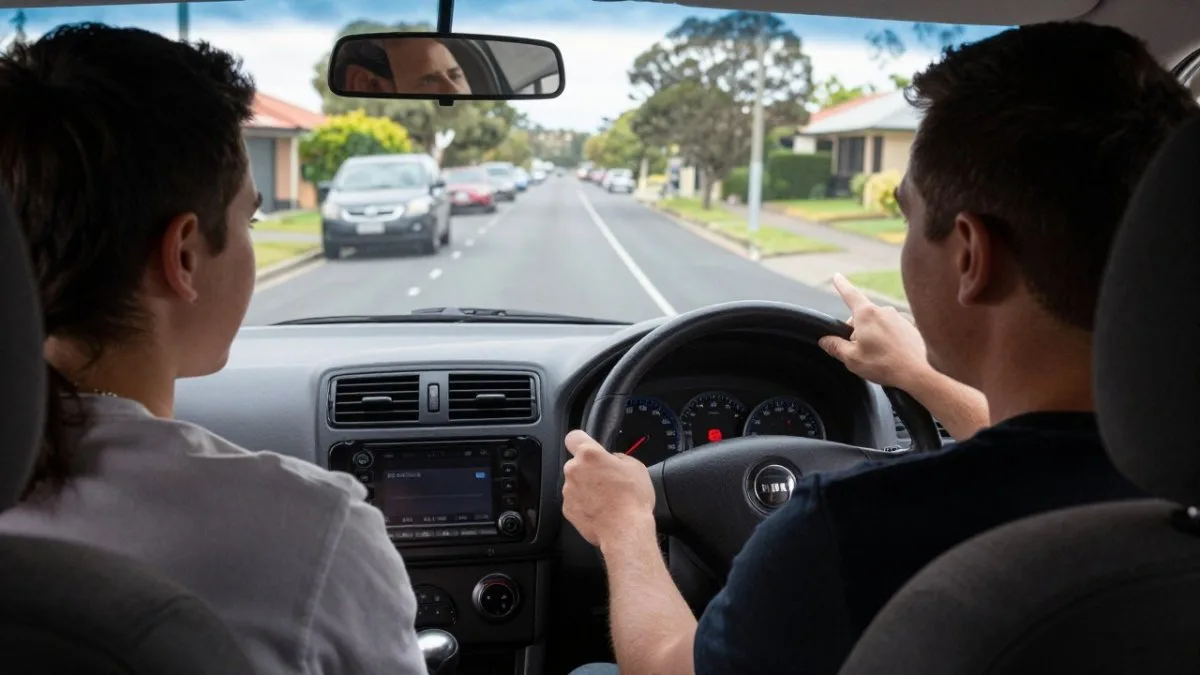
Here is how we coach each step:
- See: scan the road, the mirrors and the edges of the frame. Look for movement, brake lights and pedestrians near the kerb.
- Think: ask what that hazard will do in the next few seconds. Will the car pull out? Will the pedestrian step off?
- Do: tap when you would actually slow down or change position. Not when you first notice, and not after the hazard has passed.
The test itself was built on research into how drivers spot developing hazards, and the Transport Research Laboratory’s methodology work underpins the format used today. For a deeper look at spotting risks in real traffic, our guide to safety issues and hazards is worth reading alongside your practice runs.
Hazard Perception Test Common Mistakes That Cost You a Pass
The most common reason learners fail is timing, not knowledge: tapping too early, too late, or repeatedly through a clip all cost marks.
The specific errors we see most often:
- Tapping at the first hint of movement. Wait until the hazard would actually make you act.
- Tapping multiple times per clip. The system scores your first response.
- Ignoring mirrors and frame edges. Hazards often enter from the side.
- Rushing the practice tests. Nine tests mean nothing without reviewing your errors.
- Assuming driving experience is enough. Road time does not train the specific computerised format or its timing demands.
If you are unsure where the hazard test sits in the wider licensing process, our car driving licence overview walks through each stage.
How to Pass the Hazard Perception Test
Passing comes down to knowing the format, practising the official clips until your timing is consistent, and getting supervised time on real roads so the decisions become automatic.
The format is straightforward. You watch short video clips of real traffic scenes and tap the screen when you would respond, whether that means slowing down, changing position or preparing to stop. A systematic review of hazard perception testing found that hazard perception skills can be trained, which is why structured practice beats simply hoping experience carries you through.
Our advice for the final week:
- Complete all nine official practice tests at least once.
- Review every clip you got wrong and name the hazard out loud.
- Arrange supervised driving on varied roads, including busy intersections and tram corridors.
- Sleep well and arrive early on test day.
The test rewards calm, consistent scanning, not nerves or last-minute cramming.
Preparing for the hazard test is easier with an instructor beside you who can spot the habits costing you marks. Drive2Shine provides qualified and certified instructors, dual-pedal vehicles, and lessons for both automatic and manual driving. Get started with Drive2Shine and build the road awareness that carries you through the hazard test and your drive test.
Frequently Asked Questions
What is the VicRoads Hazard Perception Test and who needs to take it?
The Hazard Perception Test is a computer-based test that uses short video clips of traffic scenes to check whether you can spot developing hazards and respond in time. You must pass it before you can book your probationary licence drive test. It is mandatory for learner drivers in Victoria, and it is separate from the drive test itself, so passing one does not cover the other.
How many times can I take the hazard test if I fail?
You can resit the hazard test if you do not pass, but each attempt must be booked and paid for through VicRoads. Rather than repeating attempts blindly, review why your responses were marked wrong. Most failures come from clicking too early or too late, or from responding to a situation that is not yet a hazard. Work through the nine free official practice tests and discuss real-road scenarios with a supervising driver before rebooking.
Can I practise the hazard test online, and is it enough on its own?
Yes. The Department of Transport and Planning provides nine free official practice tests that simulate the real format. They are useful for learning the interface and response timing, but they are not a substitute for supervised driving in varied conditions. VicRoads recommends gaining extensive supervised experience and practising hazard spotting aloud while driving. Combine both: online practice for format, real driving for judgement.
